
An Advanced Framework for Intrusion Detection in Network Security Utilizing Machine Learning Algorithms: Challenges, Solutions, and Future Direction
DOI:
https://doi.org/10.51173/ijds.v2i2.37Keywords:
intrusion detection systems, Network Security, KDD Cup 1999, Cybersecurity Threats, Machine LearningAbstract
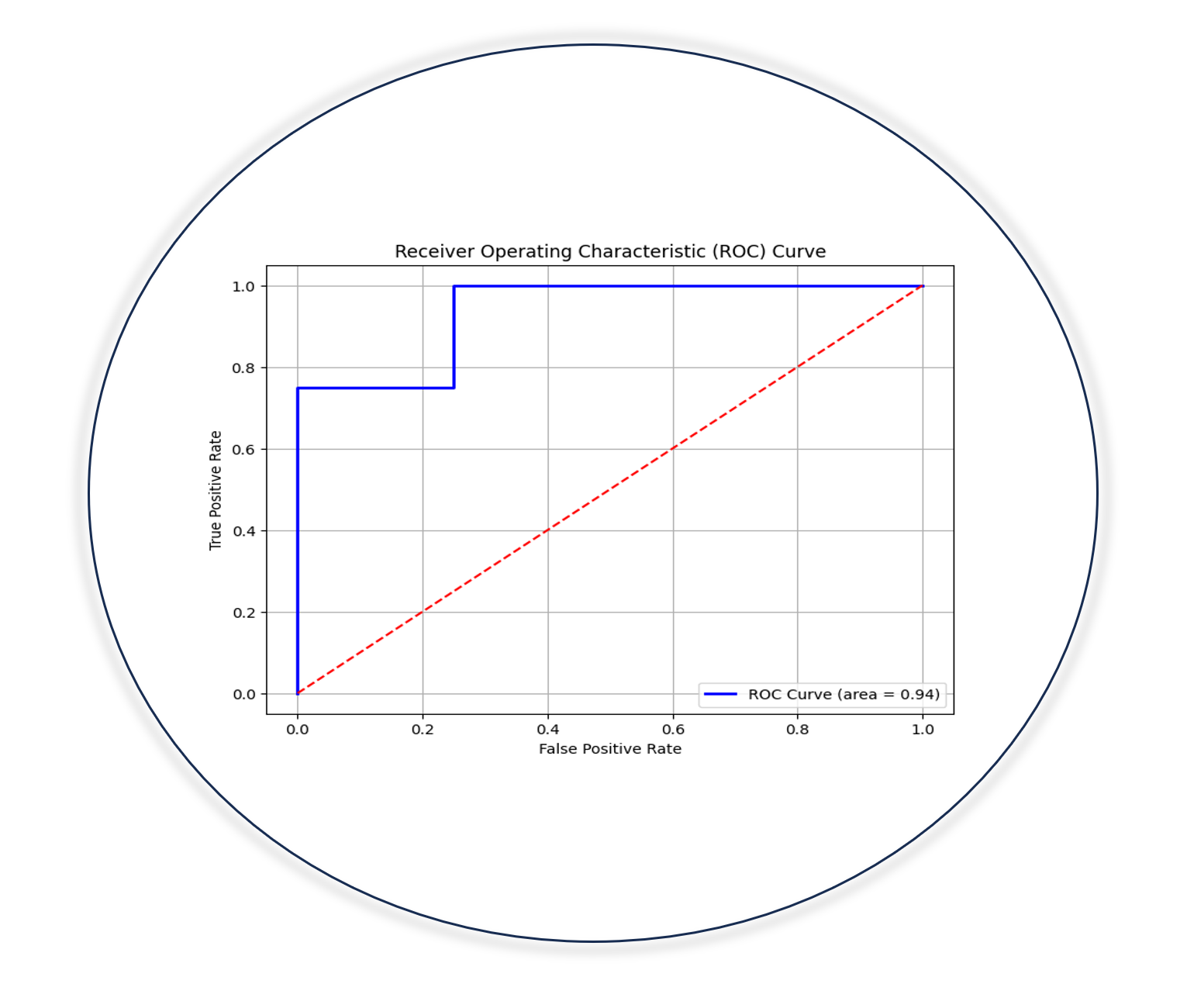
Intrusion Detection Systems (IDS) are elementary building blocks of network security that can be used to detect unauthorized access and malicious activity. But traditional IDS approaches often suffer from problems such as high false positives, inability to adapt quickly to new threats, and scalability. This paper presents an advanced intrusion detection model that uses machine learning algorithms like Random Forest, Support Vector Machine (SVM), and Neural Networks to enhance detection. Using the KDD Cup 1999 data, the framework was highly preprocessed, feature engineered, and hyperparameters adjusted to achieve optimal performance. The Neural Network model outperformed other algorithms at 92.5% accuracy, 93.8% recall, and 92.4% F1-score, proving its ability to identify complex attack patterns with minimal false positives effectively. Additionally, the proposed framework reflected significant improvement over existing IDS solutions that always achieve accuracies of 80–85%. Intrusion Detection Systems (IDS) are important components of security, assuming the task of monitoring, detecting, and responding to unauthorized activities in network frameworks. This work's most notable contributions are its integration of sophisticated machine learning methods, systematic assessment of detection performance on a wide range of attack types, and comparison with well-established IDS benchmarks. In spite of facing issues like the complexity of the dataset and computational requirements, findings point to the efficacy of machine learning-based IDS in countering modern-day cybersecurity threats. Real-time data fusion and improving model interpretability for real-world implementation are areas that need to be addressed in the future.
Downloads
References
H. J. Liao, C. H. Richard Lin, Y. C. Lin, and K. Y. Tung, “Intrusion detection system: A comprehensive review,” Journal of Network and Computer Applications, vol. 36, no. 1, pp. 16–24, Jan. 2013, doi: 10.1016/J.JNCA.2012.09.004.
Y. Liu, S. Li, X. Wang, and L. Xu, “A Review of Hybrid Cyber Threats Modelling and Detection Using Artificial Intelligence in IIoT,” Computer Modeling in Engineering & Sciences, vol. 140, no. 2, pp. 1233–1261, Jan. 2024, doi: 10.32604/cmes.2024.046473.
M. Alkasassbeh and S. Al-Haj Baddar, “Intrusion Detection Systems: A State-of-the-Art Taxonomy and Survey,” Arab J Sci Eng, vol. 48, no. 8, pp. 10021–10064, Aug. 2023, doi: 10.1007/S13369-022-07412-1/METRICS.
G. Kocher and G. Kumar, “Machine learning and deep learning methods for intrusion detection systems: recent developments and challenges,” Soft comput, vol. 25, no. 15, pp. 9731–9763, Aug. 2021, doi: 10.1007/S00500-021-05893-0/METRICS.
Z. S. Jassim and M. M. Kassir, “Enhancing Malware Detection Through Machine Learning Techniques,” InfoTech Spectrum: Iraqi Journal of Data Science , vol. 1, no. 1, pp. 1–15, Jun. 2024, doi: 10.51173/IJDS.V1I1.4.
H. Jalo and M. Heydarian, “A Hybrid Technique Based on RF-PCA and ANN for Detecting DDoS Attacks IoT,” InfoTech Spectrum: Iraqi Journal of Data Science , vol. 1, no. 1, pp. 28–41, Jun. 2024, doi: 10.51173/IJDS.V1I1.9.
Z. Ahmad, A. Shahid Khan, C. Wai Shiang, J. Abdullah, and F. Ahmad, “Network intrusion detection system: A systematic study of machine learning and deep learning approaches,” Transactions on Emerging Telecommunications Technologies, vol. 32, no. 1, p. e4150, Jan. 2021, doi: 10.1002/ETT.4150.
A. Thakkar and R. Lohiya, “A Review on Challenges and Future Research Directions for Machine Learning-Based Intrusion Detection System,” Archives of Computational Methods in Engineering, vol. 30, no. 7, pp. 4245–4269, Sep. 2023, doi: 10.1007/S11831-023-09943-8/METRICS.
N. Moustafa, N. Koroniotis, M. Keshk, A. Y. Zomaya, and Z. Tari, “Explainable Intrusion Detection for Cyber Defences in the Internet of Things: Opportunities and Solutions,” IEEE Communications Surveys and Tutorials, vol. 25, no. 3, pp. 1775–1807, 2023, doi: 10.1109/COMST.2023.3280465.
M. Verkerken, L. D’hooge, T. Wauters, B. Volckaert, and F. De Turck, “Towards Model Generalization for Intrusion Detection: Unsupervised Machine Learning Techniques,” Journal of Network and Systems Management, vol. 30, no. 1, pp. 1–25, Jan. 2022, doi: 10.1007/S10922-021-09615-7/METRICS.
H. Jmila and M. I. Khedher, “Adversarial machine learning for network intrusion detection: A comparative study,” Computer Networks, vol. 214, p. 109073, Sep. 2022, doi: 10.1016/J.COMNET.2022.109073.
A. Heidari and M. A. Jabraeil Jamali, “Internet of Things intrusion detection systems: a comprehensive review and future directions,” Cluster Comput, vol. 26, no. 6, pp. 3753–3780, Dec. 2023, doi: 10.1007/S10586-022-03776-Z/METRICS.
A. Alotaibi and M. A. Rassam, “Adversarial Machine Learning Attacks against Intrusion Detection Systems: A Survey on Strategies and Defense,” Future Internet 2023, Vol. 15, Page 62, vol. 15, no. 2, p. 62, Jan. 2023, doi: 10.3390/FI15020062.
J. Malik, R. Muthalagu, and P. M. Pawar, “A Systematic Review of Adversarial Machine Learning Attacks, Defensive Controls, and Technologies,” IEEE Access, vol. 12, pp. 99382–99421, 2024, doi: 10.1109/ACCESS.2024.3423323.
Md. T. Hossain, R. Afrin, and Mohd. A.-A. Biswas, “A Review on Attacks against Artificial Intelligence (AI) and Their Defence Image Recognition and Generation Machine Learning, Artificial Intelligence,” Control Systems and Optimization Letters, vol. 2, no. 1, pp. 52–59, Feb. 2024, doi: 10.59247/CSOL.V2I1.73.
A. Bajaj and D. K. Vishwakarma, “A state-of-the-art review on adversarial machine learning in image classification,” Multimed Tools Appl, vol. 83, no. 3, pp. 9351–9416, Jan. 2024, doi: 10.1007/S11042-023-15883-Z/METRICS.
P. Bountakas, A. Zarras, A. Lekidis, and C. Xenakis, “Defense strategies for Adversarial Machine Learning: A survey,” Comput Sci Rev, vol. 49, Aug. 2023, doi: 10.1016/j.cosrev.2023.100573.
K. He, D. D. Kim, and M. R. Asghar, “MTD-AD: Moving Target Defense as Adversarial Defense,” IEEE Trans Dependable Secure Comput, 2025, doi: 10.1109/TDSC.2025.3560246.
G. Apruzzese, L. Pajola, and M. Conti, “The Cross-Evaluation of Machine Learning-Based Network Intrusion Detection Systems,” IEEE Transactions on Network and Service Management, vol. 19, no. 4, pp. 5152–5169, Dec. 2022, doi: 10.1109/TNSM.2022.3157344.
S. N. Khan, S. U. Khan, H. Aznaoui, C. B. Şahin, and Ö. B. Dinler, “Generalization of linear and non-linear support vector machine in multiple fields: a review,” Computer Science and Information Technologies, vol. 4, no. 3, pp. 226–239, Nov. 2023, doi: 10.11591/CSIT.V4I3.PP226-239.
M. Waqas, S. Tu, Z. Halim, S. U. Rehman, G. Abbas, and Z. H. Abbas, “The role of artificial intelligence and machine learning in wireless networks security: principle, practice and challenges,” Artif Intell Rev, vol. 55, no. 7, pp. 5215–5261, Oct. 2022, doi: 10.1007/S10462-022-10143-2/METRICS.
O. H. Abdulganiyu, T. Ait Tchakoucht, and Y. K. Saheed, “A systematic literature review for network intrusion detection system (IDS),” International Journal of Information Security 2023 22:5, vol. 22, no. 5, pp. 1125–1162, Mar. 2023, doi: 10.1007/S10207-023-00682-2.
Downloads
Published
How to Cite
Issue
Section